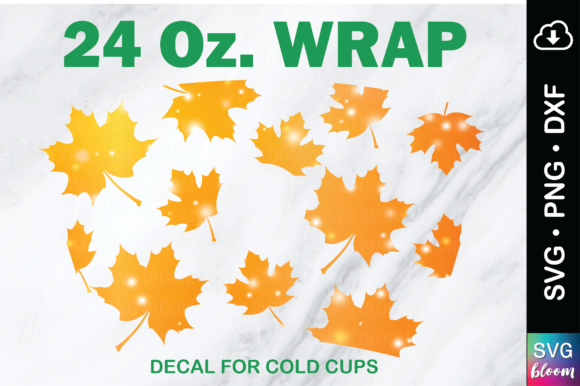
Maple Leaf Full Wrap 24oz Tumbler SVG
As a designer who’s stitched maple motifs on everything from baby onesies to boutique aprons for over twelve years, I opened Maple Leaf Full Wrap 24oz Tumbler SVG expecting something crisp and seasonal—but what stood out immediately wasn’t just the shape, it was the *intentional flow*. This isn’t a flat emblem dropped onto a rectangle. It’s built to wrap—gently curving, balanced in weight, with subtle tapering at the stem and natural spacing between lobes. That matters when you’re translating it into stitch.
Last week, I used it as the centerpiece for a custom embroidered linen tea towel set—meant for a Toronto-based kitchen boutique launching their fall collection. The client wanted “Canadian pride without cliché,” and this design delivered: warm but not saccharine, detailed but not fussy. It stitched cleanly on medium-weight linen with a light tear-away stabilizer, and the leaf’s open negative space kept fill stitch density manageable—even at 5.5" wide.
Here’s where Maple Leaf Full Wrap 24oz Tumbler SVG shines most: as a bridge between digital simplicity and tactile impact. Because it’s offered in SVG, DXF, and PNG formats, it adapts smoothly whether you’re prepping for machine embroidery (via digitizing software), laser-cutting a leather patch, or layering into a printable mockup for your Etsy listing. As a Graphics asset, it’s versatile—but its real strength lies in how thoughtfully it’s scaled and proportioned for real-world wrap surfaces.
What It Actually Embroiders Like—Not Just What It Looks Like on Screen
On sweatshirt fabric? Yes—it holds up. The outer edges are clean enough for satin stitch borders, and the interior veins translate well into delicate running stitch accents if you choose to digitize them. But—and this is key—it’s not an applique design by default. You’ll need to digitize it yourself or work with a digitizer to add underlay, pull compensation, and appropriate stitch types for your target fabric. Don’t assume the SVG will embroider “as-is” without that step.
I tested it on a structured cotton cap, hooping carefully with cutaway + topping. The curve of the design matched the cap’s dome surprisingly well—no distortion, no puckering—because the original vector respects organic wrap logic. That said, avoid using it full-size on curved areas smaller than a 4" hoop unless you simplify the inner details first. Tiny lobes and tight corners can collapse in dense fill stitch, especially on stretchy knits.
For baby embroidery? Ideal—when scaled down to 3–3.5". At that size, the leaf reads clearly even in low-density stitching, and the smooth contours avoid scratchy thread buildup. Pair it with soft pastel thread colors on organic cotton onesies, and it reads as gentle, handmade, intentional—not mass-produced.
Where to Use It Thoughtfully (and Where to Pause)
- Thin or lightweight fabrics: Reduce stitch density manually—this design has generous interior space, but default fills can overwhelm voile or rayon challis.
- Dark fabric backgrounds: Test contrast early. The leaf’s silhouette is strong, but fine interior lines may disappear without a white underlay or reversed stitch order.
- Textured surfaces (like terry cloth towels): Add a light iron-on topping. The design’s moderate detail stays legible, but without it, stitches can sink between loops.
- Commercial embroidery projects: Confirm licensing before bundling it into a digital embroidery file pack for resale. This is a Print Templates asset—not inherently licensed for redistribution.
- Small shop product photography: Use the PNG version for clean, shadow-free mockups. Its transparent background and crisp edges make it ideal for flat-lay shots of mugs, totes, and nursery pillows.
Design Notes Every Embroidery Professional Should Check First
Before committing to a client project or bulk production, here’s my checklist—refined across hundreds of embroidery files:
- Run a test stitch on scrap fabric matching your final substrate—especially if using textured, stretchy, or dark material.
- Review thread color contrast in both natural and artificial light. Maple reds and burnt oranges pop on cream, but mute on charcoal.
- Inspect small details at 200% zoom in your editing software. Are inner vein lines thick enough to digitize cleanly? If they’re under 0.3mm, simplify or omit them.
- Check hoop compatibility. The full-wrap width suggests a minimum 5"x7" hoop for best results—smaller hoops require careful cropping or scaling.
- Compare black-and-white and grayscale mockups. Does the shape retain recognition without color cues? (It does—clean silhouette, good weight distribution.)
- Verify stabilizer pairing. Medium cutaway works for most apparel; lightweight tear-away suits linens and tea towels.
- Ask: Does this support my brand voice? For rustic, modern, or heritage-leaning craft businesses, yes. For ultra-minimalist or tech-forward brands, consider simplifying further.
Why It Builds Trust—Not Just Decoration
Customers don’t buy maple leaves. They buy meaning: connection to place, seasonality, quiet pride, handmade care. When Maple Leaf Full Wrap 24oz Tumbler SVG appears on a hand-stitched pillow cover or a limited-run tote, it feels considered—not slapped on. That perception elevates perceived value, supports premium pricing, and strengthens repeat engagement, especially among Etsy sellers and boutique owners who rely on authenticity.
I’ve watched buyers pause longer on listings featuring this design in lifestyle mockups—especially when styled with natural textures, neutral palettes, and intentional negative space. It doesn’t shout. It invites. And in a crowded handmade market, that kind of quiet confidence is rare.
Bottom line: Maple Leaf Full Wrap 24oz Tumbler SVG isn’t just another holiday graphic. It’s a well-proportioned, adaptable foundation—one that earns its place on heirloom baby blankets, small-batch aprons, and thoughtful personalized gifts. Use it with intention, test it with care, and let its quiet strength do the talking.