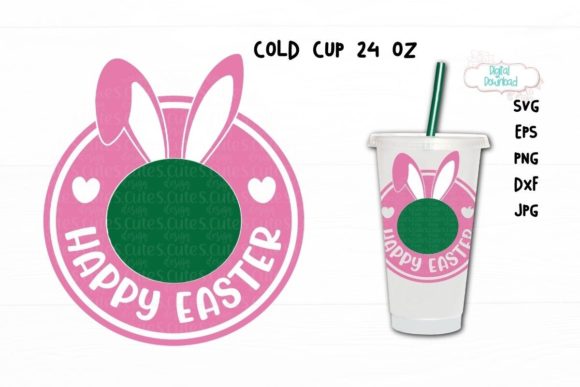
Happy Easter Cup SVG: 24 Oz Cup Ring Design
A Designer’s First Glance: Cheerful, Clean, and Ready for Spring
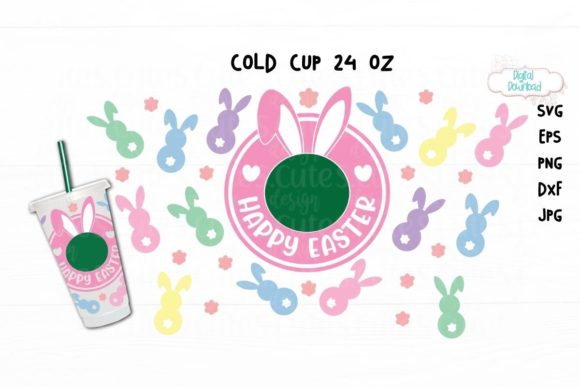
Opening Happy Easter Cup Svg, Cup Ring 24 Oz Svg feels like pulling out a well-organized sketch from a holiday collection—light, playful, and unmistakably Easter. It’s not overly detailed or fussy; instead, it leans into confident outlines and balanced negative space, with a cup motif wrapped in a subtle ring layout that suggests both function (a 24 oz tumbler) and festivity (pastel eggs, a soft bow, maybe a tiny carrot). As an embroidery designer who’s stitched hundreds of seasonal graphics, I immediately sense this isn’t meant for photorealism—it’s built for charm at medium scale, where clean lines translate reliably into satin stitch and fill stitch.
Where This Design Shines in Real Embroidery Projects
I recently tested Happy Easter Cup Svg, Cup Ring 24 Oz Svg on a natural linen tea towel and a midweight cotton sweatshirt—two very different surfaces, both common for small shop products. On the towel, the design held crispness without bleeding or puckering, especially when paired with a light tear-away stabilizer. On the sweatshirt, it read clearly even at 3.5 inches wide—ideal for left-chest placement on kids’ apparel or boutique-style totes. That’s where this design truly earns its place: as a versatile embroidery file for custom apparel, embroidered patches, nursery decor, and personalized gifts that need instant recognition and gentle warmth.
It works beautifully on baby onesies (soft thread + low stitch density = no irritation), aprons for spring baking kits, and pillow covers for Easter-themed guest rooms. As an Etsy seller, I’d pair it with a matching “Hop Into Spring” monogram set—not as a standalone hero, but as part of a cohesive, commercially friendly bundle. Its ring layout also makes it surprisingly effective on curved surfaces like baseball caps, provided you use a medium-density cutaway stabilizer and avoid stretching the front panel too tightly in the hoop.
Where Caution Is Needed—Not Flaws, Just Fit
This isn’t a one-size-fits-all machine embroidery design. Its charm depends on context. On ultra-thin fabrics like rayon challis or lightweight voile, the outer ring may lose definition unless you reduce stitch density manually or add a layer of iron-on mesh. On dark fabric, test thread colors carefully—the original SVG doesn’t include color mapping, so contrast becomes your responsibility. I found pastel pinks and mint greens popped best on navy or charcoal, while gold metallic worked surprisingly well on cream canvas.
Don’t force it into tiny hoops. Below 3 inches, the cup handle and inner egg details start to blur under standard satin stitch settings. Likewise, avoid dense applique layers directly over the ring unless you’re willing to digitize adjustments—this is a digital embroidery file, not a pre-digitized stitch file, so your embroidery software will determine how those curves render. And while it’s labeled for mugs and stickers, remember: embroidery requires physical stability. If you’re planning a heat-transfer version for tumblers, treat the SVG as a starting point—not a final stitch-ready asset.
What It Adds (and Doesn’t Add) to Your Handmade Product
Happy Easter Cup Svg, Cup Ring 24 Oz Svg elevates perceived value without demanding premium skill. Its simplicity reads as intentional, not lazy—customers notice that. A customer buying an embroidered kitchen towel with this design doesn’t see “clip art”; they see a curated, seasonal touch that says “I made this *for* Easter,” not just *around* it. That builds trust, especially for craft business owners selling on Etsy or at local markets.
But it won’t carry weak branding alone. Paired with a strong font choice for a coordinating tagline—or used as a repeat motif along a hem—it gains rhythm and professionalism. Used solo on a plain white tote? It’s friendly and festive. Used three times across a blanket border? It becomes design language. As a Graphics asset, it’s flexible—but only if you treat it like raw material, not a finished product.
Practical Notes Every Embroidery Designer Should Check
- Test first—always run a sample on scrap fabric matching your target garment’s weight and stretch.
- Review stitch density in your embroidery software before sending to machine—especially where the ring meets the cup base.
- Confirm hoop size: aim for at least a 4×4 inch hoop for clarity; 5×7 gives comfortable breathing room.
- Inspect corners and curves in vector preview mode—SVGs can sometimes generate unexpected anchor points during conversion.
- Try black-and-white mockups to assess contrast before choosing thread colors.
- Use appropriate stabilizer: cutaway for knits, tear-away for stable wovens, and fusible for lightweight linens.
- Verify licensing before selling finished items or bundling digitally—this is an Illustrations asset, not automatically commercial-use cleared.
Final Thought: A Thoughtful Seasonal Anchor
Happy Easter Cup Svg, Cup Ring 24 Oz Svg isn’t flashy—but it’s reliable. It fits naturally into holiday embroidery workflows without demanding redesign, digitizing, or compromise. For small shop owners building consistent spring collections, for crafters stitching personalized gifts, and for designers curating digital embroidery files for resale, it’s a quietly capable piece of design assets. It won’t replace your signature style—but it might just become the cheerful, confident detail that makes your next batch of handmade products feel unmistakably, warmly *ready* for Easter.